From Batch 1 to graduation: meet the first //kood in Ukraine graduates
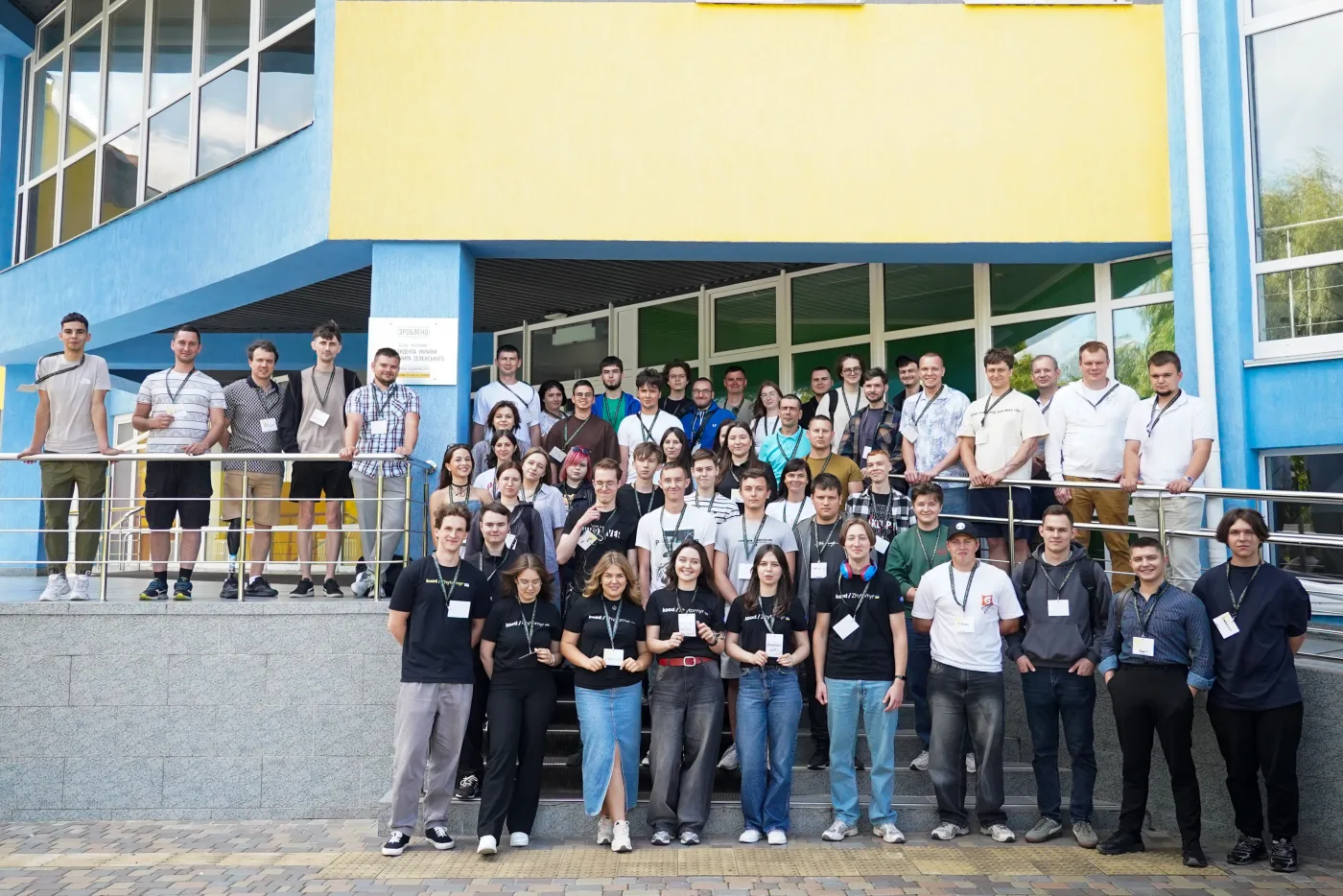
Alex Kaminskiy and Yaroslav Vlasenko are the first participants of kood/Zhytomyr Batch 1 to complete the programme — and both have plenty to say about what it actually took.
In September 2025, the first Batch of kood/Zhytomyr began their journey.
They came with different backgrounds, goals and expectations. Some already had programming experience from university but wanted to go further and try a different way of learning — one built around projects, peer reviews, independent problem-solving and learning from each other.
Less than a year later, Batch 1 has reached a new milestone: //kood in Ukraine has its first graduates.
Their paths through //kood were different. Alex found his direction in Generative AI and spent as much time as he could exploring it. Yaroslav remembers the projects that pushed him into bigger codebases and real teamwork. But both reached the same milestone.
Building things that actually work
For Alex, the projects that stood out most were the ones involving artificial intelligence.
One of them was an AI assistant — essentially an opportunity to build a working ChatGPT-like application with function calling, contextual memory and multi-step conversations. Another was a calorie tracker designed to adapt to individual users and their goals, whether losing or gaining weight. The system collected a user’s parameters and used an integrated AI model to generate personalised nutrition plans based on their data.
Those projects also helped Alex decide where he wants to go next.
“That’s why I want to keep working on projects where artificial intelligence is actively used and integrated.”
Yaroslav’s most memorable project was very different: a multiplayer web game. What stayed with him was not only the final product, but the process of building it together.
“That was the project where I really experienced teamwork. It was interesting to see how different parts of the code came together into one finished product that actually worked.”
As the projects grew, so did the challenge. More files, more technologies, more people working on the same product — and less room to think only about your own piece of code. For Yaroslav, that complexity eventually taught him something simple: a task that initially looks impossible becomes manageable once you break it into smaller problems and start solving them one by one.
The hardest part isn’t always the code
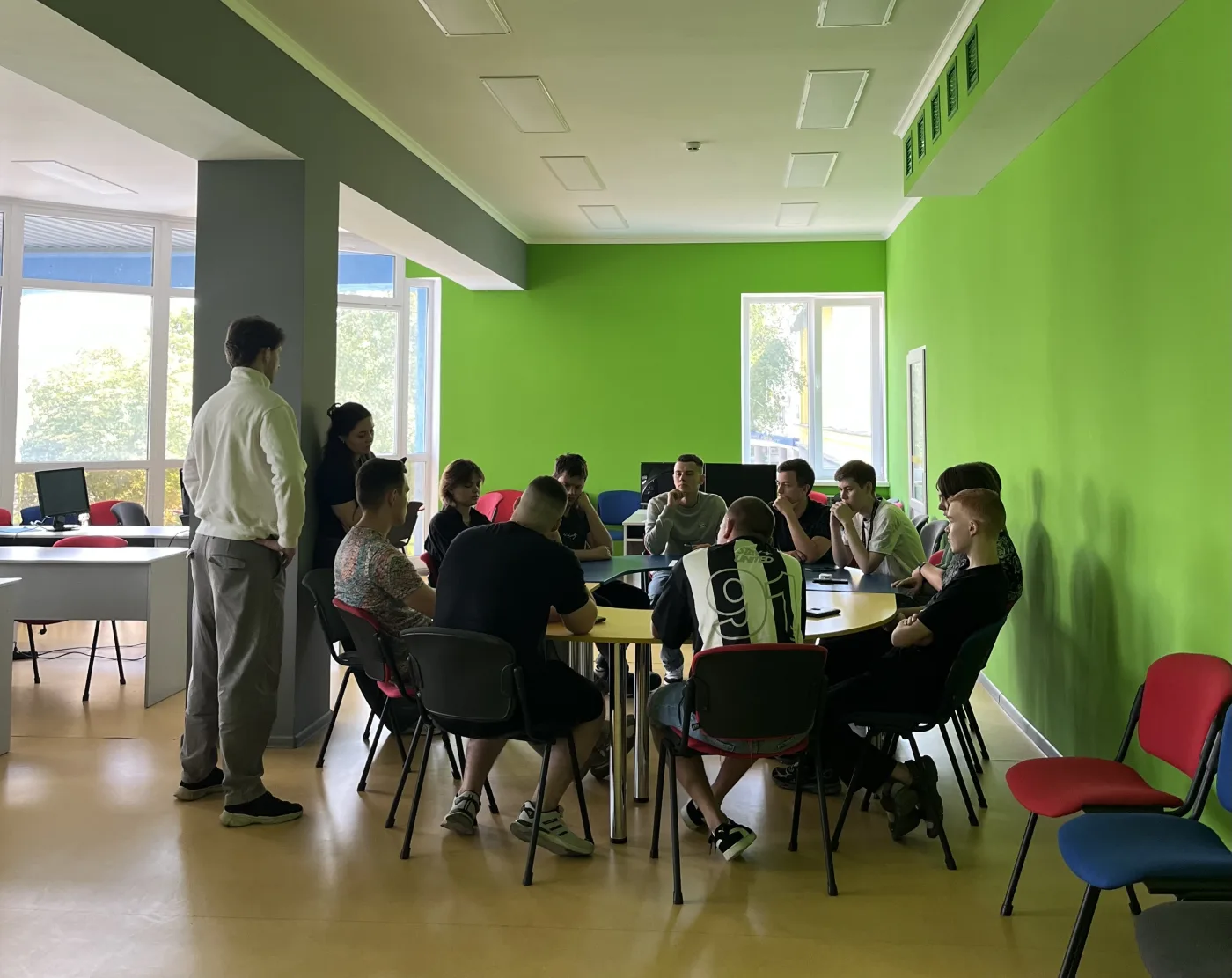
Finishing a project at //kood does not mean simply submitting it and moving on. Peer review is part of the process: students evaluate each other’s work, explain their decisions and defend the solutions they have built.
For Alex, surprisingly, this became one of the hardest parts of the programme — not because of the review itself, but because of the logistics behind it. With students studying from different places, everyone has their own schedule, responsibilities and, sometimes, a completely different time zone. Finding people available to review a project could be more frustrating than solving the technical challenge itself.
The same reality affected teamwork. Dividing responsibilities makes ambitious projects possible, Alex says, but a team also means learning to work around different schedules, deadlines and levels of responsibility.
The circumstances of //kood in Ukraine make this especially visible. Students have been learning during wartime, and members of the community are now spread across Ukraine and abroad.
It is also the one thing Alex would change if he were to do it all over again.
“Yes, I would do it again — but on one condition: that everyone was more or less in the same location.”
— Alex Kaminskiy, kood/Zhytomyr Batch 1
For him, having students together would mean more than easier reviews. It would create a stronger local community where people could exchange knowledge and experience naturally, rather than trying to coordinate it across borders and time zones.
Learning from people, not just from code
That same peer-to-peer system, however, became one of the most valuable parts of the experience for both graduates.
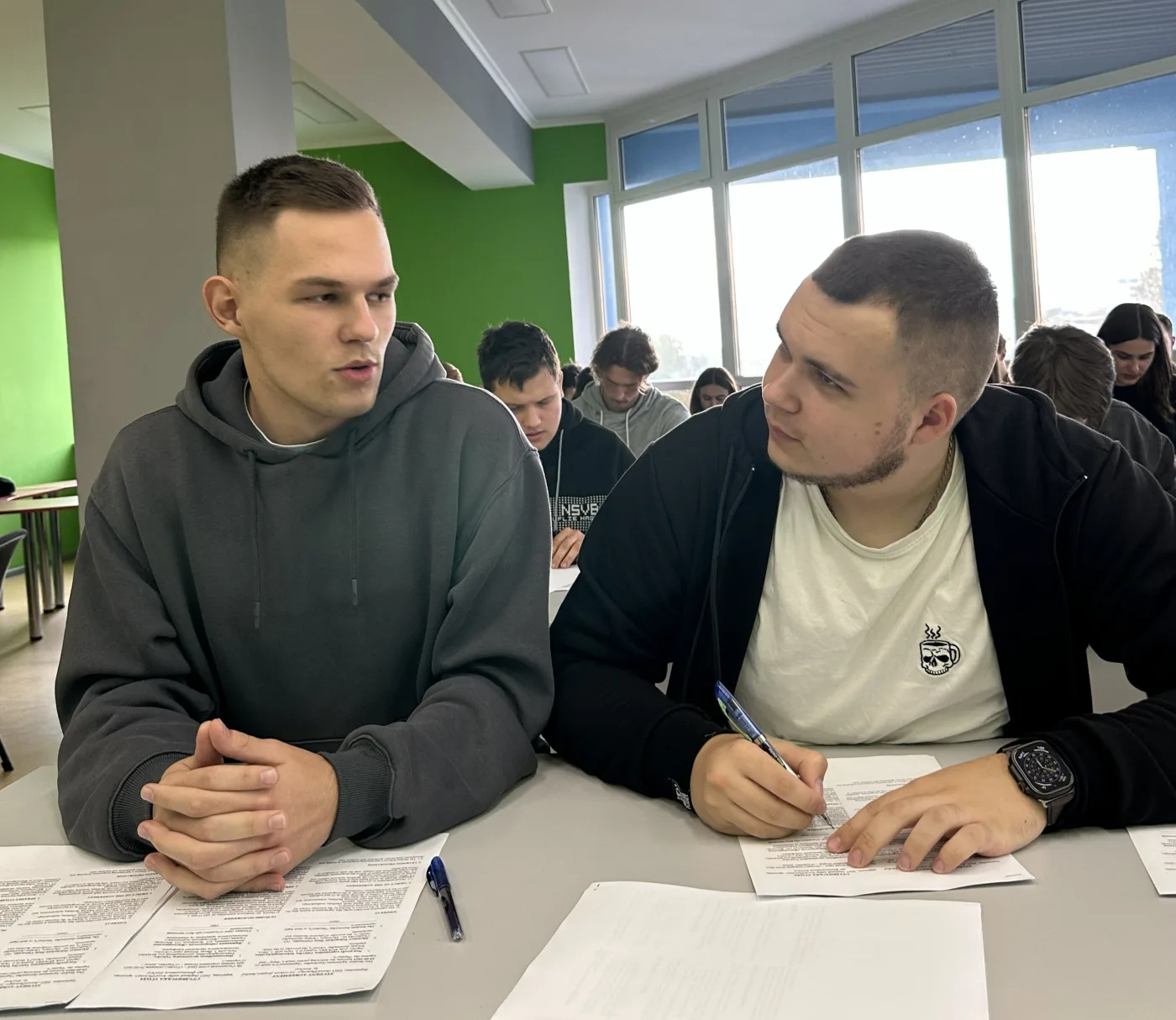
For Alex, reviewing code with other students developed a skill that is difficult to learn from a conventional course: explaining your own thinking.
“A textbook gives you syntax, but another person shows you that there can be ten different approaches to the same problem — and each can be right in its own way.”
Explaining a solution forces you to look at your own code through someone else’s eyes. Sometimes that means spotting something you missed. Sometimes it means discovering an entirely different way to solve the same problem.
Yaroslav had a similar experience. Other students taught him to work in a team, ask for help earlier and become more comfortable with code review. Most importantly, he stopped expecting every problem to have one “correct” solution.
The point was not simply to get through a review. It was to learn how to discuss code, question decisions and improve a solution together.
Getting things wrong is part of the job
The two graduates entered //kood with different attitudes towards failure.
Alex already had professional experience, so his approach remained largely unchanged throughout the programme: when something breaks, stay calm, look at it from different angles and keep working until you understand why.
“You have to approach mistakes calmly and rationally. Look at the situation from different sides, and sooner or later you will solve any problem. It just takes time and patience.”
For Yaroslav, the change was more noticeable.
“Mistakes used to frustrate me more. Now I see them as a normal part of learning and programming. The important thing is to understand the reason, fix it and move on.”
That shift also changed how he approached difficult tasks. By the end of the programme, complexity itself was no longer a reason to panic.
What gets you to the finish line?
There is no lecturer at //kood setting the pace every day. Students have to decide when to work, when to ask for help and, ultimately, whether to keep going.
For Alex, the biggest driver was knowing exactly what he wanted. After choosing Generative AI as his specialisation, he spent much of his free time on it and moved quickly through the remaining projects.
“I had a strong desire to complete all the required projects and a lot of motivation to work on something I genuinely enjoy.”
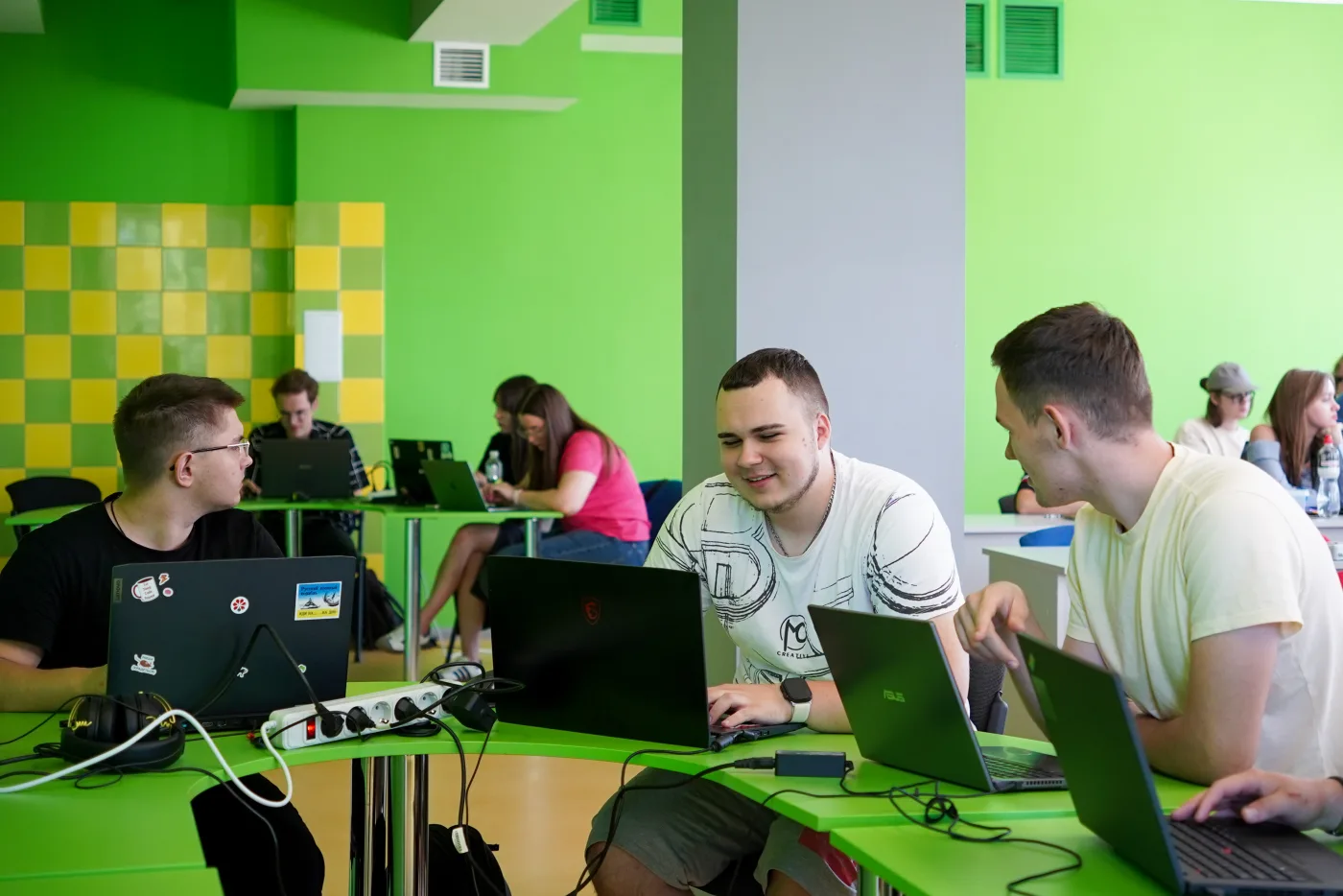
Yaroslav points to a combination of persistence, the other students and the //kood learning system itself. When something did not work, there was usually someone to discuss it with — and another perspective could be enough to unlock the solution.
Neither describes graduation as the result of never getting stuck. Quite the opposite. Getting stuck happened all the time. The difference was learning what to do next.
Would they do it again?
For both, the answer is yes — although neither would repeat the experience in exactly the same way.
Alex would want more of the community physically together. Yaroslav would change his own approach.
“I would worry less about mistakes, communicate more with other students and ask for help sooner.”
He says the programme has made him much more confident when facing difficult tasks. Problems that once looked intimidating now feel like things that can be figured out — provided you keep working at them.
And perhaps that is the most useful way to look at the first //kood in Ukraine graduates.
When Batch 1 started at kood/Zhytomyr in September 2025, there were no //kood in Ukraine graduates before them. No previous Ukrainian Batch had completed the journey they were just beginning.
Now, less than a year later, that has changed.
Alex and Yaroslav are the first to cross the finish line, but they certainly won’t be the last.
For them, graduation marks the beginning of whatever comes next. For kood/Zhytomyr, it marks something else: the first chapter of Batch 1 is starting to come full circle.