193 applications, 81 coders — who is cohort #01?
Three selection sprints. One all-women cohort. A Doctor of Sciences and four veterans in the same batch. A look at who actually showed up to build a career in tech.
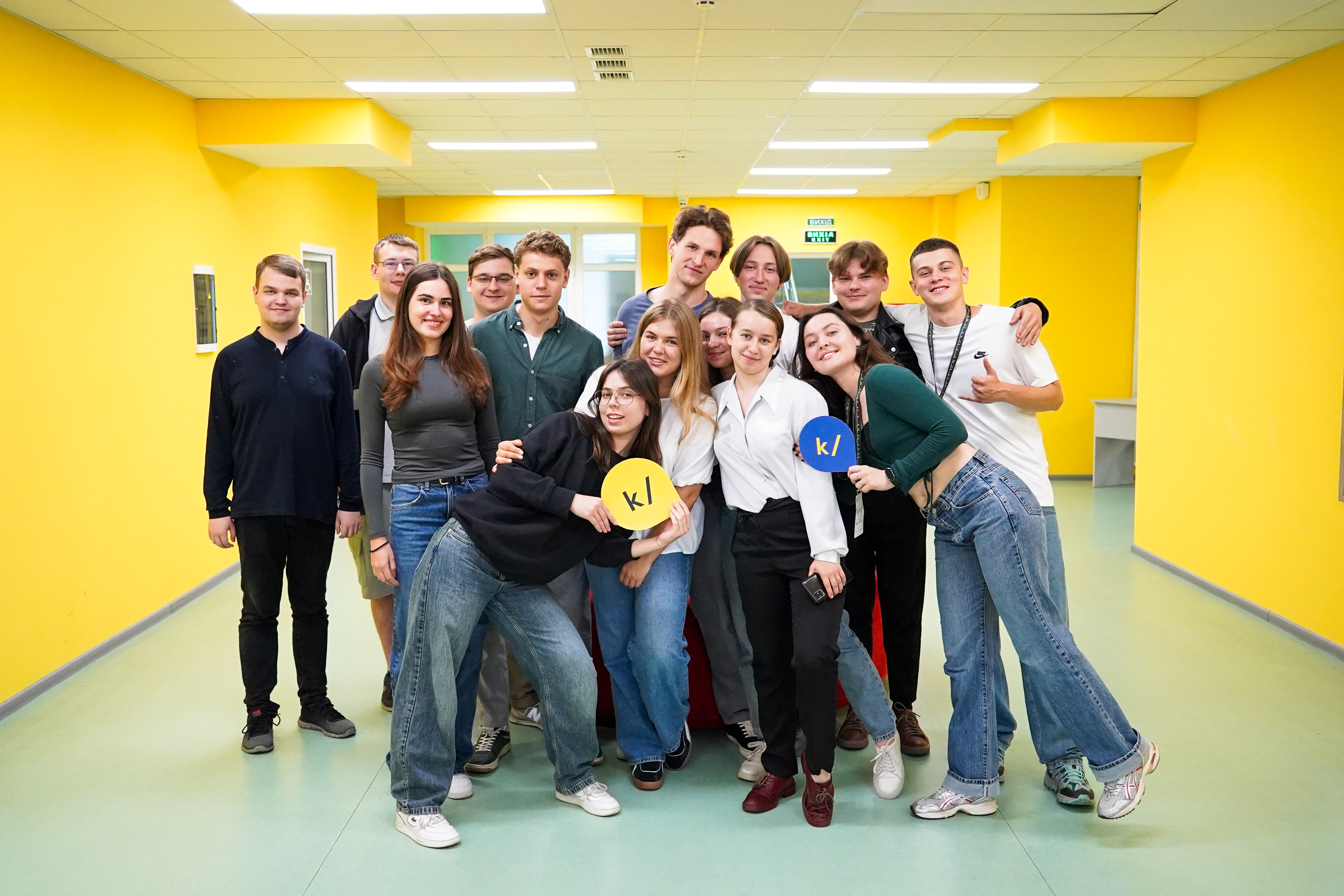
How the cohort was built
Cohort #01 of kood/Zhytomyr was formed through three Selection Sprints run between July and September 2025 — three weeks each, starting on-site at Zhytomyr Polytechnic State University and finishing remotely. Each sprint served as both an introduction to the //kood learning model and the admissions filter for the main programme. Of the 193 people who applied across all three sprints, 81 made it through.
The profile that emerged was not what anyone predicted.
Sprint 1: the youngest, the fastest
The first sprint drew 42 applications and admitted 22 participants. Average age: 20. The majority were current or recently graduated students from Zhytomyr Polytechnic and nearby institutions, many with a computer science or engineering background. Most had limited formal work experience. Around one in five was a woman.
The sprint exposed a calibration issue quickly: the first week’s tasks were too easy for participants who already knew how to code. Several finished the day’s work in under two hours and left the building. That feedback shaped what came next.
Sprint 2: wider, older, more varied
Sprint 2 brought 102 applications — more than double — and accepted 55 active participants. The average age jumped to 27. The backgrounds became genuinely surprising: alongside IT students and engineers came lawyers, sales professionals, media workers, forestry graduates, military management specialists, and educators. Four participants were veterans.
The academic credentials ranged from basic education through to three PhDs and a Doctor of Sciences. This was not a cohort of people who had failed elsewhere — it was people who had succeeded in one field and were now choosing to start over in another.
Sprint 3: kood/Empower
The third sprint was something different. Named kood/Empower, it was run as an all-women cohort. Of 49 applicants, the programme admitted participants with backgrounds spanning healthcare, education, linguistics, social sciences, law, and state service, alongside software engineering. Many were young women with no formal work experience yet.
The sprint produced a mix of technical ability levels wider than the previous two, but the motivation and engagement were consistently high. Several went on to become some of the most active contributors in the main programme.
What the numbers say
One in three admitted students is a woman — a strong result for a first cohort at a new campus. The average age is 24.6, with a spread that runs from 18 to mid-forties. Around 60% are current university students; the other 40% came from outside academia entirely, choosing to retrain on their own terms.
The fields of study represented in cohort #01 span IT, computer science, engineering, business, law, security, education, military management, forestry, linguistics, healthcare, and social sciences. By any measure, this is one of the most diverse cohorts any coding school has produced — and that diversity is a strength, not a footnote.
What this means for the programme
Peer-to-peer learning works best with diverse groups. Someone from a healthcare background asks different questions than someone from IT. A veteran approaches a debugging problem differently than a 20-year-old who grew up with computers. The //kood model doesn’t require everyone to arrive at the same pace — it requires people to engage, to ask for help, and to help others.
Cohort #01 has tested that model in genuinely difficult conditions: hybrid study during a war, with air raid interruptions, electricity cuts, and the particular challenge of learning to code for the first time while managing the everyday uncertainty of life in Ukraine in 2025. Most of them are still here.